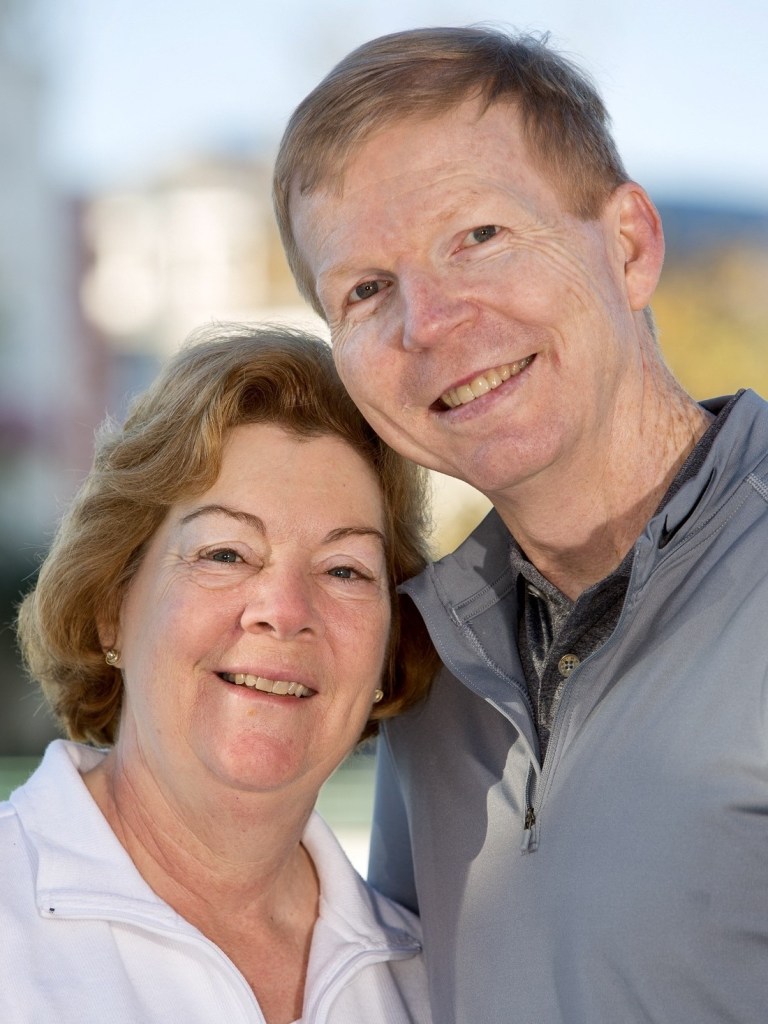
Most of us have been touched in some way by the realities of Alzheimer’s disease or other forms of dementia. In our own lives, Donna’s grandmother and Tom’s mother lived their last years with dementias in various forms. Currently, Donna’s mother is living with a mixed Alzheimer’s and vascular dementia diagnosis in a nearby assisted- living community, and we are her closest family care partners.
On a broader scale, as of 2023, a tsunami of nearly 6.7 million people in the United States and 58 million people around the world are estimated to be experiencing dementia. While this is often called the global “Dementia Crisis,” most relevant to each of us are our own individual journeys of caregiving, which can be marked by waves of fear, sadness, anger, guilt, and pain that come when we suspect and finally confirm that a loved one has a diagnosis of dementia.
We remember the day this wave first hit, when Donna’s mom received the diagnosis of mixed Alzheimer’s and vascular dementia.
Working as a clinical psychologist (Tom) and a rehabilitation services manager in home health (Donna) did little to prepare us for the anxiety, sadness, frustration, and uncertainty that followed. Since that day, we have experienced the impact of such emotions through periods of reduced sleep, quick tempers, increased worry, and depressed moods that sometimes seem to materialize out of nowhere. These emotions are voiced through questions like “What is Mom going to need?”, “How are we going to make this work?”, and “What if she will need to be cared for in a facility of some kind?” Other emotions show themselves in the frustration of questions we’ve asked Mom, like “Don’t you remember, I told you that yesterday?” or “Why would you think such a ridiculous thing?” It seems like our feelings keep getting tangled up in the tasks, demands, and responsibilities that our care partner roles require and, in turn, lead to feeling guilty when we realize that the more stressed out we become, the more stressed out Mom becomes, which sometimes causes her dementia symptoms to worsen. All of this makes us less effective in problem-solving the financial, legal, and medical tasks that need to be accomplished so that Mom can be safe and secure. Clearly, we have some serious untangling of emotions to do.
Tangled
What do you think of when you hear the word tangled? We immediately envision our daughters as young children, when we would try to brush their tangles out while rushing around in the morning before elementary school. How those strands of hair could get so knotted up remains a mystery.
Although the specific causes for Alzheimer’s disease and other dementias are not fully clear, brain research is making progress in identifying signs of the potential biological changes, or biomarkers, in our brains that play a role in the cause of dementia-related illnesses. We know that some conditions, such as Alzheimer’s disease, involve a “tangling” of organic matter, called tau proteins, inside our brain cells that occurs as we get older.
Since information is processed in our brains via the transmission of electrical or chemical impulses traveling among circuits of brain cells, these organic tangles in our brain circuitry can mirror our kids’ hair tangles in a brush: Our brains’ organic materials get twisted up and choke off nutrients that our brains need to maintain healthy brain cells. As a result, cells in various parts of our brains begin to die off, and the signs of their demise show up in symptoms such as loss of memory, confusion, and physical decline.
All of this combines to make providing care to a loved one with dementia very stressful. Six out of ten care partners report that their stress levels are “high” to “very high.” As a result of such stress, we can begin to experience our own depression, anxiety, physical health problems, financial pressures, anger, and conflict in relationships with our loved one and other family members. Our stress becomes tangled with the love and care we try to provide to our loved ones, and we can feel very conflicted and “twisted up.”
Mastering the Stress of Caring
While scientists around the world are trying to solve the biological mysteries of protein tangles in Alzheimer’s disease, we can focus on our personal experiences of stress and work to solve the mysteries of emotional tangles that twist our relationships with our loved ones into bundles of tension. In the articles ahead, we will target some of the underlying reasons that can make caring for people with dementia—and caring for ourselves—so emotionally difficult and, as we do, we can identify ways to build the concrete coping strategies necessary to better manage emotions in ways that lead to three major outcomes:
- Improved psychological well-being.
- Greater emotional consistency in relationships with your loved one.
- The discovery of a deeper meaning in your care partner relationships.
As you work toward these outcomes, instead of remaining tangled in stress and tension, you can become more deeply knotted in love with your loved one.